Pine Island: Lake Winnipesaukee's Methodist Ministers & the $75 Island
The Island Someone's Father Wouldn't Let Him Buy
Imagine being 12 years old, working on a horse-powered boat hauling cordwood across Lake Winnipesaukee, and being offered an entire island for $75. You want it. You tell your father you can work off the price without any cash upfront.
His answer is no.
Within a few years, individual lots on that same island are selling for thousands of dollars.
That story, recounted in a 1947 profile of Captain John Goodhue when he was 80 years old, is one of the best introductions to Pine Island that anyone could write.

Pine Island Basics: Meredith's Hidden Summer Colony
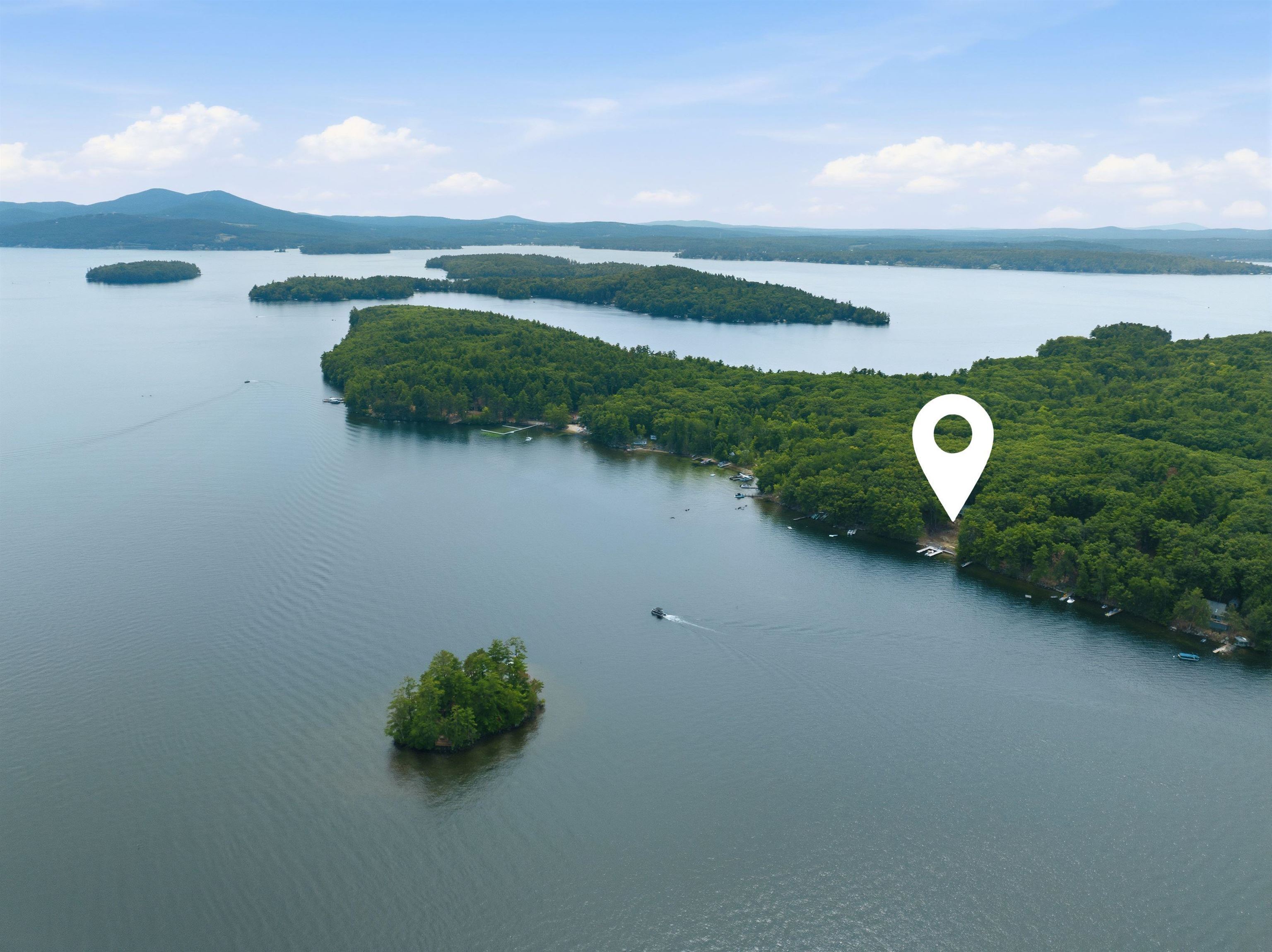
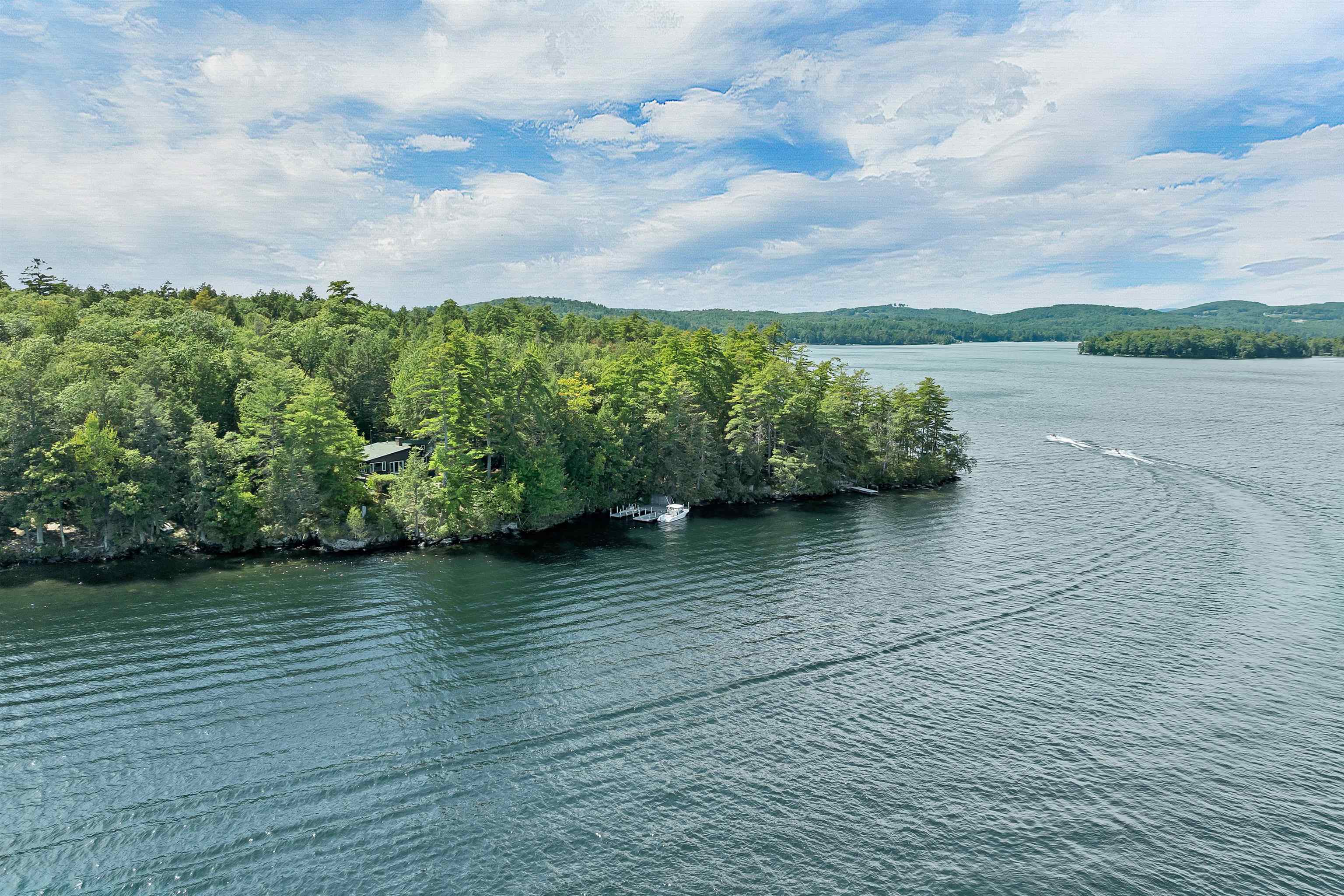
Pine Island sits in Meredith, near Meredith Neck, and covers roughly 72 acres, placing it among the 15th-largest islands on Lake Winnipesaukee, New Hampshire's largest lake. (An 1772 estimate put it at only 42 acres, but inconsistent acreage figures are a recurring theme in Winnipesaukee island history.)
Today, Pine Island is a privately owned summer community with individual lots ringing the shoreline. By 1901, it had fully evolved into the vacation enclave it remains. Getting there, however, required more than two centuries of farmers, clergy, timber dealers, and at least one very stubborn father.
From Masonian Lot to Farm Island
Pine Island enters the written property record in 1781, when it and Stonedam Island were grouped together as Lot #12 during the Masonian Proprietors' division of larger Winnipesaukee islands. The lot was drawn in the name of Jotham Odiorne, who had actually died 30 years earlier. It eventually passed to Portsmouth men Peter Pearse and Daniel Treadwell, whose wives were Odiorne's daughters.
In 1827, Pearse and Treadwell sold Pine Island to Caleb Lovejoy, a Meredith Neck farmer who had no interest in summer cottages. He used the island for seasonal grazing and as a woodlot, which was entirely typical for Winnipesaukee islands in that era. Pine was essentially a floating extension of his mainland farm.
After Lovejoy died in 1841, his son sold the island at public auction to three Meredith Neck farmers, who informally divided it into three sections. The deed history from this period is genuinely messy, including overlapping property descriptions and at least one deed that appears to describe Pine Island while calling it Black Cat Island. Even 19th-century lawyers, apparently, got Winnipesaukee islands confused.
Horse Boats, Cordwood, and a $75 Missed Opportunity
This is where Captain Goodhue enters the picture. As a boy of about 12, Goodhue was hired for 25 cents a day plus board to haul cordwood from Pine Island to the mainland. The crew consisted of the captain, young Goodhue, and a horse. Horse boats were powered by horses walking on a treadmill aboard the vessel, driving the paddle mechanism.
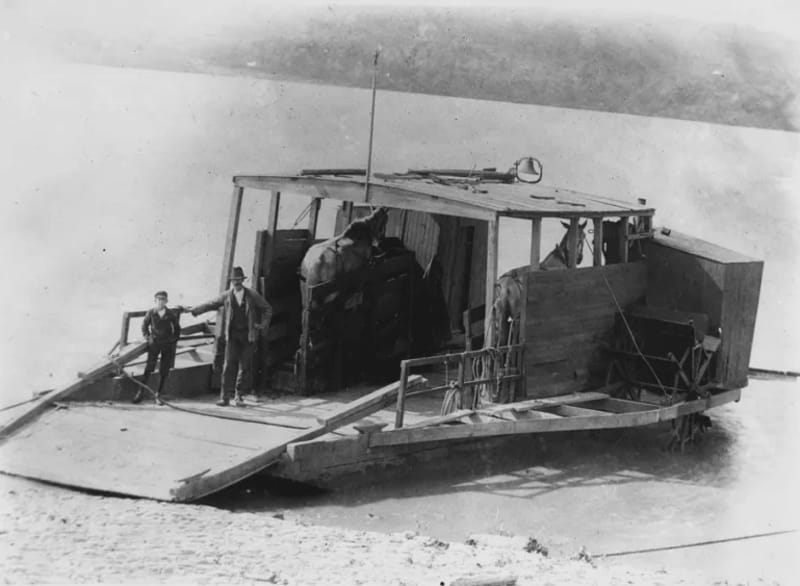
When the captain offered to sell Goodhue the entire island for $75, the boy was ready to say yes. His father refused, convinced he would never make money from it.
An entire Winnipesaukee island for $75, and Dad said no.
This anecdote is more than a good story. It captures what Winnipesaukee looked like before the vacation era: lumber, cordwood, working farms, mills, and horse boats, rather than summer cottages and private yachts.
1888: Four Methodist Ministers Change Everything
By 1882, a man named John S. Roberts had consolidated ownership of the entire island. Then, in 1888, he sold Pine Island to four Massachusetts Methodist ministers:
- William E. Huntington of Newton
- William I. Haven of Malden
- James H. Humphrey of Reading
- Joseph W. Dearborn of Stoneham
These were, in other words, some fairly heavyweight late-19th-century Methodist intellectuals, and they were building a summer retreat on a former cow pasture.
More ministers followed. Among the most interesting was Wesley O. Holway, a Harvard graduate and Methodist minister who became a longtime U.S. Navy chaplain and organized the Navy Temperance League. One family, connected by marriage to the Holways, arrived with a private steam yacht called the Falcon, described by the Boston Herald in 1900 as one of the finest-appointed private yachts on Winnipesaukee.
The ministers may have frowned on booze, but they were not exactly roughing it.
The Pine Island Outing Club and the Oval
In 1892, the original owners incorporated the Pine Island Outing Club (PIOC) and transferred ownership of the island to it. At that point, perhaps two or three houses stood on the entire island.
In 1898, the club hired surveyor C. H. Sleeper to lay out the island. His plan created 20 private lots around the shoreline. But here is the detail that really distinguishes Pine Island as a planned community: the founders deliberately left roughly 10 acres in the center as communal land, known as "the Ellipse" or "the Oval."
On May 3, 1901, all 20 lots were sold to PIOC members and their families. Twelve of those lots were purchased by nine Methodist ministers.
No Booze, No Pigs, No Factories
The Pine Island Outing Club inserted restrictions directly into the deeds. Among them:
- No manufacturing operations
- No making or selling intoxicating liquors
- No more than two dwelling houses per lot
- No horse stables
- No pig sties
- Owners must maintain sanitary conditions
By 1902, the mail boat was already stopping at Pine Island, a useful marker of how quickly the community had matured. Within about 15 years, the island had gone from an undeveloped woodlot to a place with surveyed lots, cottages, communal property, deed restrictions, private steam yachts, and mail delivery.
Pine Island's Methodist identity also lasted far longer than just the founding generation. Later residents included Bishop G. Bromley Oxnam, one of the most prominent Methodist bishops in mid-20th-century America, who attracted national attention during the McCarthy era.
Properties on Pine Island
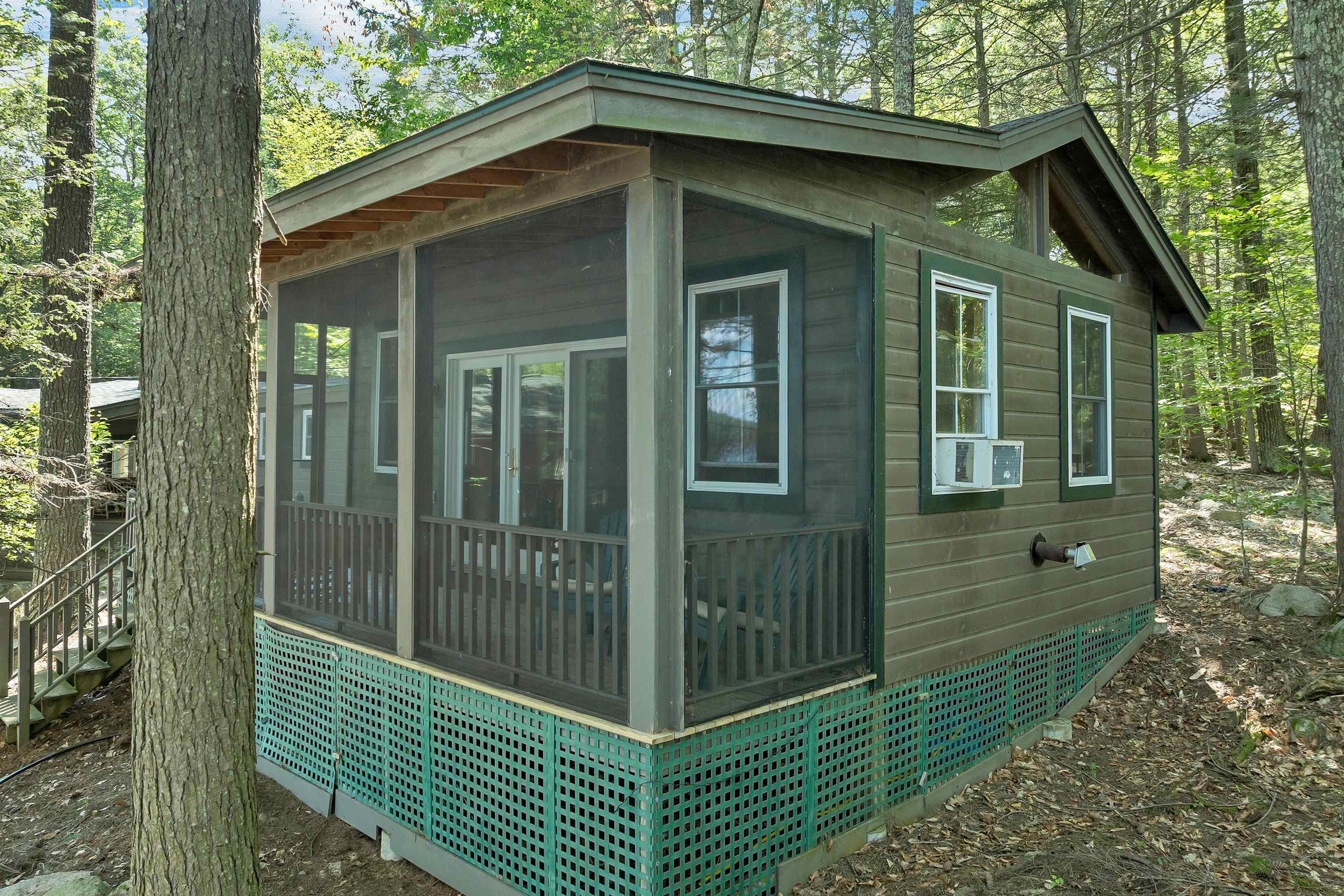
For anyone captivated by Pine Island's layered history and wondering what it would be like to own a piece of it, opportunities do come to market. Whether you are looking for an active listing, tracking a pending sale, or researching what properties have sold for in recent years, the Pine Island listings page at WinniRE keeps a running record of all active, pending, and closed sales on the island.
To own a place on Pine Island is to join a story that stretches back through Methodist ministers, communal ovals, temperance covenants, and a horse boat crew of two men and one horse. Not many vacation homes come with that kind of backstory.
A Very Tidy Pine Island Timeline
- 1772: James Hersey estimates Pine at about 42 acres
- 1781: Pine and Stonedam grouped as Island Lot #12 in the Masonian Proprietors' division
- 1827: Caleb Lovejoy buys Pine for grazing and woodlot use
- 1842: Island sold at auction, divided among three Meredith Neck farmers
- c. 1880: Young John Goodhue offered the whole island for $75; his father refuses
- 1882: John S. Roberts consolidates ownership
- 1888: Roberts sells Pine to four Massachusetts Methodist ministers
- 1890 to 1891: First known summer houses appear
- 1892: Pine Island Outing Club incorporated
- 1898: Island surveyed into 20 lots with a 10-acre communal Oval at the center
- May 3, 1901: All 20 lots transferred to PIOC members; nine ministers buy 12 of them
- 1901: Deed restrictions prohibit liquor, factories, pig sties, horse stables, and more
- 1902: Mail boat service reaches Pine Island
- 1900s onward: Pine continues as a private summer community with strong Methodist ties for decades
Frequently Asked Questions
Where is Pine Island located on Lake Winnipesaukee?
Pine Island is located in Meredith, New Hampshire, near Meredith Neck. It is approximately 72 acres, placing it among the 15th-largest islands on Lake Winnipesaukee, which is New Hampshire's largest lake.
Why did Methodist ministers buy Pine Island in 1888?
Four Massachusetts Methodist ministers purchased Pine Island from John S. Roberts in 1888 and used it as the foundation for a planned summer colony. Several of the founding families had deep ties to the temperance movement and Methodist intellectual life, which shaped both the community's character and its deed restrictions.
What is the Oval or Ellipse on Pine Island?
When the Pine Island Outing Club surveyed the island into 20 private lots in 1898, the founders deliberately set aside roughly 10 acres in the interior as shared communal land. This central space became known as "the Oval" or "the Ellipse," and it reflects the intentional, community-minded planning behind the island's development.
What were the deed restrictions on Pine Island lots?
The Pine Island Outing Club inserted binding restrictions into the original 1901 deeds prohibiting the manufacture or sale of intoxicating liquors, any manufacturing operations, horse stables, pig sties, and more than two dwelling houses per lot. Owners were also required to maintain sanitary conditions. These rules reflected the temperance convictions of many of the island's founding residents.
Where can I find current and past Pine Island property listings?
The Pine Island listings page at WinniRE tracks all active, pending, and closed sales on the island in one place. It is the best starting point if you want to understand what properties are available or what the market has looked like in recent years.
Curious about other waterfront properties in the Lakes Region? View homes for sale →
On the Market

35 Brook Hill
Meredith
Listing by Roche Realty Group · Carol Raffle

247 Meredith Center Road
Meredith
Listing by KW Coastal and Lakes & Mountains Realty/Meredith · Kayli Currier

S19/ 55 Needle Eye Road
Meredith
Listing by KW Coastal and Lakes & Mountains Realty/Meredith · Rachel Xavier

27 Stevens Avenue
Meredith
Listing by Coldwell Banker Realty Gilford NH · Wanda Keenan
IDX display courtesy of Yankee Pedlar Realtors, Wolfeboro NH.
PrimeMLS Listing Information displayed herein is deemed reliable but is not guaranteed accurate by PrimeMLS. This display of listings may or may not be the entire Compilation from the PrimeMLS database, and PrimeMLS does not guarantee the accuracy of such information. © PrimeMLS, Inc.
Listing brokers may report inaccurate data to michelle@yankeepedlarrealtors.com or call (603) 569-1000.