Rattlesnake Island: The Wild, True History of Winnipesaukee's Tallest Island
Most lakes have an island with a dramatic name and a vague legend to match. Lake Winnipesaukee's Rattlesnake Island is different. The snakes were real. The attempts to kill them were real. The lumbermen who got bitten were real. And the island's documented history stretches back more than 225 years, woven into New Hampshire's colonial land disputes, its art world, and at least one of Wolfeboro's most beloved historic buildings.
This is the story of one of the most remarkable pieces of land on New Hampshire's largest lake.
A Giant Among Islands
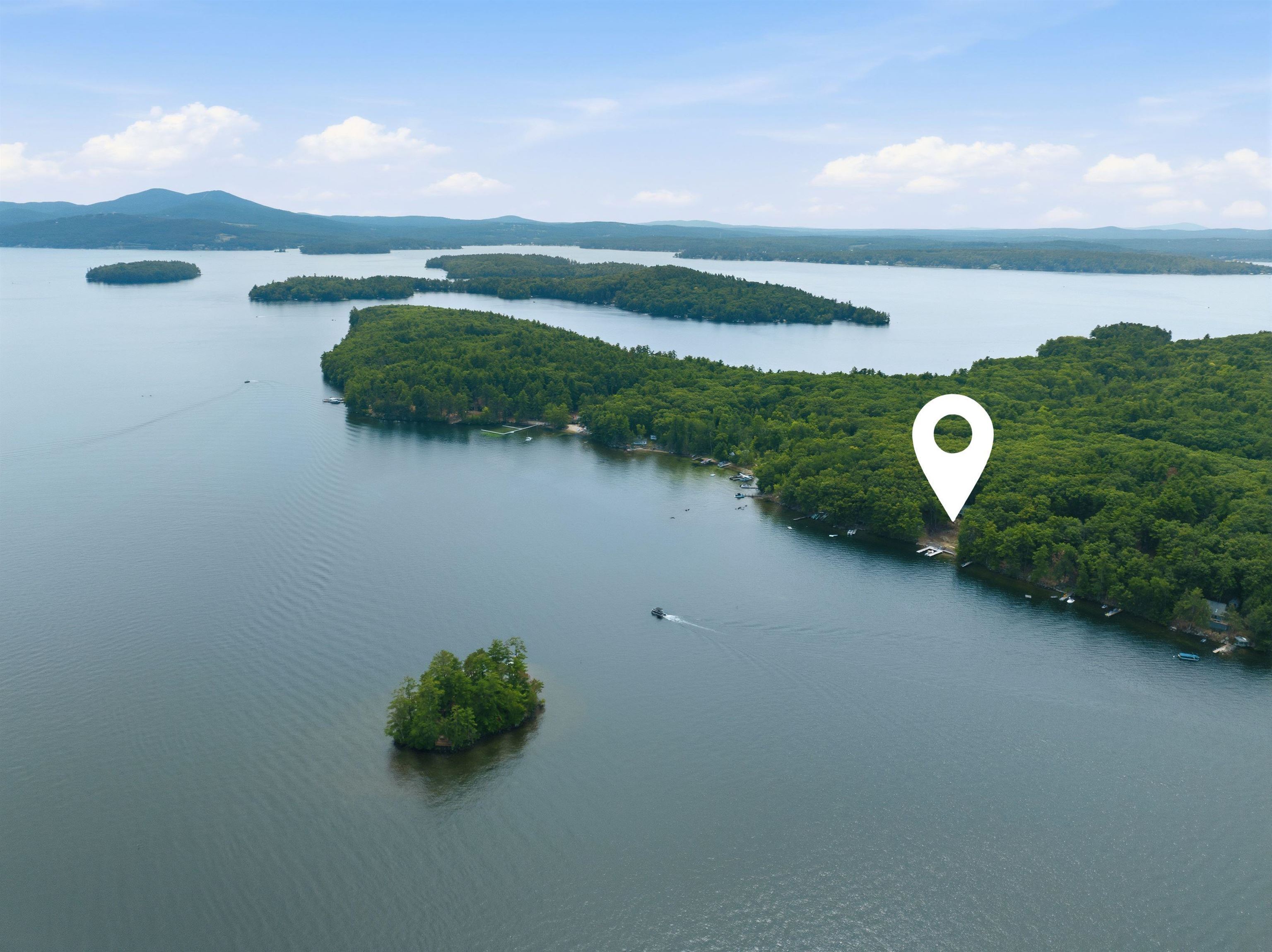
Rattlesnake Island sits in the town of Alton, near the southeastern end of Lake Winnipesaukee. At roughly 368 acres, it is one of the largest islands on the lake, stretching about 2 miles long with approximately 5 miles of shoreline. But its most striking feature is its height. The island rises roughly 370 to 390 feet above lake level, making it the highest island on Lake Winnipesaukee.
The eastern face is steep and rocky, dropping dramatically toward the open water of The Broads. The southern end softens into a lower, gentler peninsula. From the water, the island has a strong, almost commanding presence, and that topography turns out to explain a great deal about its history: the deep rocky ledges, the difficulty of clearing it, and the perfect habitat it once offered to a now-vanished resident.
The Name Is Literal
Some people suggest Rattlesnake Island was named because its long profile resembles a snake from the water. That explanation gets less interesting the moment you read the actual historical record.
The island was named for its rattlesnakes.
The Lake Winnipesaukee Historical Society states plainly that the name came from the island's former rattlesnake population. Paul Blaisdell's Three Centuries on Winnipesaukee, published in 1975, preserved recollections from people within living memory of the snakes. They remembered rattlesnakes from the island being displayed during Weirs Reunion Week. They remembered boating along the rocky eastern shore and watching snakes bask in the sun on the ledges. And they remembered something more sobering: lumbermen working on the island were bitten.
At some point, someone decided the situation called for drastic action. The island was set on fire in an attempt to drive out or kill the rattlesnake population. It did not work. The snakes retreated deep into the cracks and crevices of the rocky ledges, waited out the flames, and came back out afterward.
The timber rattlesnake, New Hampshire's only native venomous snake, now survives in only a handful of locations in the state. The old Rattlesnake Island population appears to have died out long ago, though no one seems to have recorded a precise date. Blaisdell, writing in the 1970s, noted he had not encountered definite proof of rattlesnakes there "in recent years," but acknowledged his sources remembered them from living memory. Rattlesnakes were historically documented on the island, though no confirmed modern population is known.
There is also a piece of local folklore, worth mentioning for what it is, that says Native people placed rattlesnakes on the island deliberately to guard valuables from European settlers. That story has the texture of later legend rather than documented history. The actual presence of the snakes needs no embellishment.
One more historical note: scholars working on Abenaki place names recorded a form, Sisikwa Menahan, translating literally as "Rattlesnake Island" in Lake Winnipesaukee. Whether the English name was drawn directly from an Indigenous one is uncertain, but it suggests the island's identity was recognized long before European settlement was well established.
Surveyors, Land Disputes, and 1788
By February 1, 1788, Rattlesnake Island had entered the written record of New Hampshire government. Surveyors tasked with resolving a long-running dispute over the boundaries of the old Masonian proprietary claim ran their line directly across the island, from Gilmanton, over Rattlesnake Island, and across Winnipesaukee into Wolfeboro. The New Hampshire legislature had acted in 1787 to protect landowners caught inside the disputed territory, and the island was fixed enough in the regional geography to serve as a landmark in that official survey.
Gilmanton. Rattlesnake Island. Wolfeboro. That line is more than 225 years old, and it tells us the island's name and identity were already firmly established by the late 18th century.
Historical records also indicate that maps and property plans for the lake's islands were being drawn as early as the 1766 to 1770 period, when colonial proprietors were dividing island land. The full story of Rattlesnake Island's earliest private owners remains an interesting avenue for further research.
Painted, and Sold, in Boston in 1871
By the second half of the 19th century, Rattlesnake Island had become scenery worth buying. A historical catalogue of New Hampshire art records a work titled Rattlesnake Island, Winnepiseogee offered at the Leonard Auction Rooms in Boston on May 24, 1871, lot number 112.
The island was not simply a local curiosity. It was considered picturesque enough to sell as New Hampshire landscape art in one of the country's major cities. Whether that painting survives in a public collection is an open question, but the record alone is a striking reminder of how early the Lakes Region captured outside attention.
1915: The Old-Growth Pine Comes Down
The Lake Winnipesaukee Historical Society records that the island's virgin pine was logged off in 1915. This was not casual wood gathering. The phrase "virgin pine logged off" describes the removal of old-growth timber from one of the lake's most rugged and steep islands, and it almost certainly brought crews of lumbermen into close contact with whatever rattlesnake population remained.
Blaisdell's accounts of lumbermen being bitten fit squarely into this period. The burning of the island to kill the snakes likely happened around the same era, a desperate measure that, as we know, accomplished nothing.
The 1915 logging operation has a remarkable footnote. The Libby Museum in Wolfeboro, built between roughly 1908 and 1912, was constructed by local workmen using timber felled on Rattlesnake Island. The dates suggest that timber was being harvested from the island before the major 1915 cut, with 1915 marking the point at which the remaining virgin stand was largely cleared. Some of Rattlesnake Island's old-growth trees still stand, in a sense, inside one of Wolfeboro's most beloved historic buildings.
Geology, Deep Water, and Why the Ledges Are So Dramatic
Rattlesnake Island is not simply a glacial deposit. The Lake Winnipesaukee Historical Society connects the island geologically to the Belknap Mountains and the ancient volcanic formations of the surrounding region. Its dramatic rocky ledges reflect the same deep geological story that shaped the nearby peaks.
That geology has another consequence worth noting: the water beside Rattlesnake Island drops very quickly and reaches some of the deepest points on the lake. Older histories of Carroll County cited soundings exceeding 200 feet off the eastern shore. More recent measurements from the Historical Society place the depth at around 169 feet southeast of the island. Either way, the underwater topography mirrors the drama above the surface. The east face rises steeply from the lake, and it keeps rising from well below the waterline.
Conservation Wins the Interior
At various points in the 20th century, Rattlesnake Island faced the prospect of heavy interior development, with plans that included selling inland lots as well as shoreline parcels. That did not happen.
Today, the Lakes Region Conservation Trust holds 102 acres of the island's interior as the Rattlesnake Island Preserve. The Rattlesnake Island Association, incorporated May 12, 1969, manages another portion of conserved land. Most of the island's homes line the shoreline, while the high central spine remains largely wooded and protected.
The Association also solved one of the great practical problems of island ownership by acquiring mainland property near Glidden Cove and Smith Point, giving residents parking, boat launching, docking, and trailer storage. Later, electricity arrived by submarine cable beneath the lake, followed by telephone service and eventually DSL. The contrast writes itself:
- 1788: Government surveyors use the island as a fixed geographic landmark
- 1871: A painting of it sells at a Boston auction house
- 1915: Lumbermen cut old-growth pine among timber rattlesnakes
- Late 1900s: Power cables run beneath Lake Winnipesaukee to summer cottages
A Special Place to Know, and to Visit
Rattlesnake Island is a private residential island today, not a public destination. But it is visible from the water, and its dramatic eastern face above The Broads is one of the most recognizable sights on Lake Winnipesaukee. Boaters, anglers, and anyone exploring the southeastern reaches of the lake will know it when they see it: the steep climb of rock and forest, rising higher than any other island on the lake.
For those who love the Lakes Region for its depth of character as much as its beauty, Rattlesnake Island is exactly the kind of place that rewards knowing the story behind the name.
If the story has you wondering what it would take to own a piece of it, our Rattlesnake Island guide covers the practical side: what is for sale right now, how the association handles mainland parking and boat access, and how the market here compares with the rest of the Winnipesaukee islands.
Frequently Asked Questions
Why is it called Rattlesnake Island?
The name is literal. The Lake Winnipesaukee Historical Society and Paul Blaisdell's Three Centuries on Winnipesaukee both confirm the island was named for an actual population of timber rattlesnakes that lived there historically. Blaisdell preserved firsthand accounts of snakes sunning on the rocky ledges, being displayed at Weirs Reunion Week, and biting lumbermen working on the island. A shape-resemblance theory exists but is far less supported by evidence than the documented snake population.
Are there still rattlesnakes on Rattlesnake Island?
No confirmed population is known today. Blaisdell, writing in the 1970s, noted he had not encountered definite proof of rattlesnakes there in recent years, though his sources remembered them from living memory. New Hampshire's timber rattlesnake now survives in only a handful of locations statewide, and the old Winnipesaukee island population appears to have died out long ago.
What happened with the 1915 logging?
The Lake Winnipesaukee Historical Society records that the island's virgin pine was logged off in 1915, removing the old-growth timber from one of the steepest and most rugged islands on the lake. Timber from Rattlesnake Island was also used before that date to help construct the Libby Museum in Wolfeboro, which was built between roughly 1908 and 1912.
How deep is the water next to Rattlesnake Island?
The water drops very steeply off the island's eastern shore, which faces The Broads. Older historical sources cited soundings exceeding 200 feet in that area. More recent measurements from the Lake Winnipesaukee Historical Society place the depth at around 169 feet southeast of the island. Either way, it is among the deepest water on the lake.
Can visitors explore Rattlesnake Island?
Rattlesnake Island is a private residential island, not a public park. The Lakes Region Conservation Trust does hold 102 acres of the interior as the Rattlesnake Island Preserve, though access is limited given the island's private character. The most accessible way to appreciate the island is from the water, where the dramatic eastern face above The Broads is a memorable sight for anyone boating in the southeastern part of Lake Winnipesaukee.
Curious about life on Lake Winnipesaukee? Whether you're dreaming of a week on the water or looking for a property of your own, we'd love to help you find your place on the lake.
Rattlesnake Island guide & listings → | All island listings →
Browse Lake Winnipesaukee Vacation Rentals → | View Homes for Sale →
Properties You Might Love
On the Market

46 Eagles Way
Alton
Listing by RE/MAX Innovative Bayside · Patrick Fleming

5 Loon Cove Road
Alton
Listing by KW Coastal and Lakes & Mountains Realty/Wolfeboro · Adam Dow

113 Lockes Corner Road
Alton
Listing by EXP Realty · Darlene Ellis

51 Brynn Lane
Alton
Listing by Carey Giampa, LLC/Rye · Wendy McHugh
IDX display courtesy of Yankee Pedlar Realtors, Wolfeboro NH.
PrimeMLS Listing Information displayed herein is deemed reliable but is not guaranteed accurate by PrimeMLS. This display of listings may or may not be the entire Compilation from the PrimeMLS database, and PrimeMLS does not guarantee the accuracy of such information. © PrimeMLS, Inc.
Listing brokers may report inaccurate data to michelle@yankeepedlarrealtors.com or call (603) 569-1000.